Majdanek is one of the most significant and best-preserved Nazi concentration camp memorials in Europe – and it stands not in a remote forest, but on the edge of the city of Lublin, visible from the road. Our private guided tour of Majdanek takes you through the full Historical Path with an expert local guide: from the Monument-Gate to the Mausoleum containing victims' ashes, through original barracks, preserved gas chambers, and the crematorium. This is not a group tour. It is a private, three-hour encounter with history, designed to be meaningful rather than overwhelming.
What You Will See – The Private Tour Route
Our 3-hour private guided tour follows the full Historical Path through the Majdanek State Museum, marked by 17 glass information panels in Polish, English, and Hebrew. Below is what you will experience at each stage.
Monument-Gate – The Symbolic Entrance
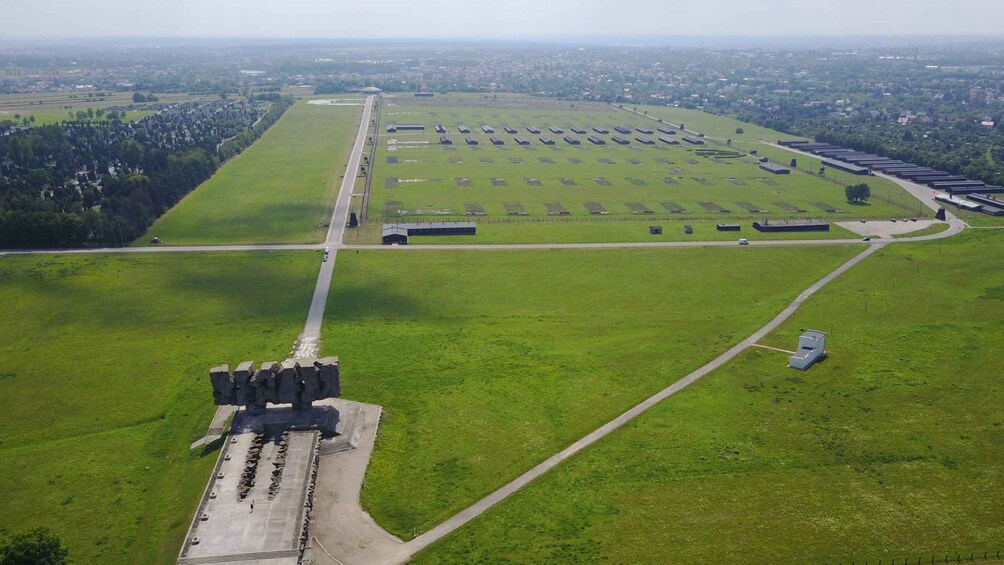
The tour begins at the monumental gate structure that marks the entrance to the memorial. Your guide explains the camp's founding in October 1941, its original purpose as a forced labour facility, and how it evolved into a site of mass extermination under Operation Reinhard. The scale of the open grounds ahead – 90 hectares, 70 original buildings – becomes immediately apparent.
The Former Prisoner Barracks
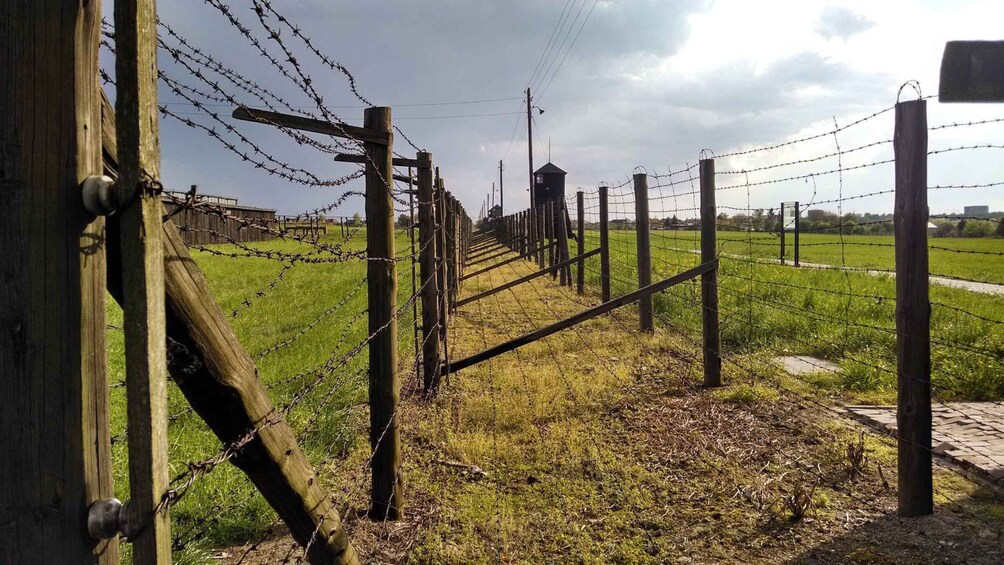
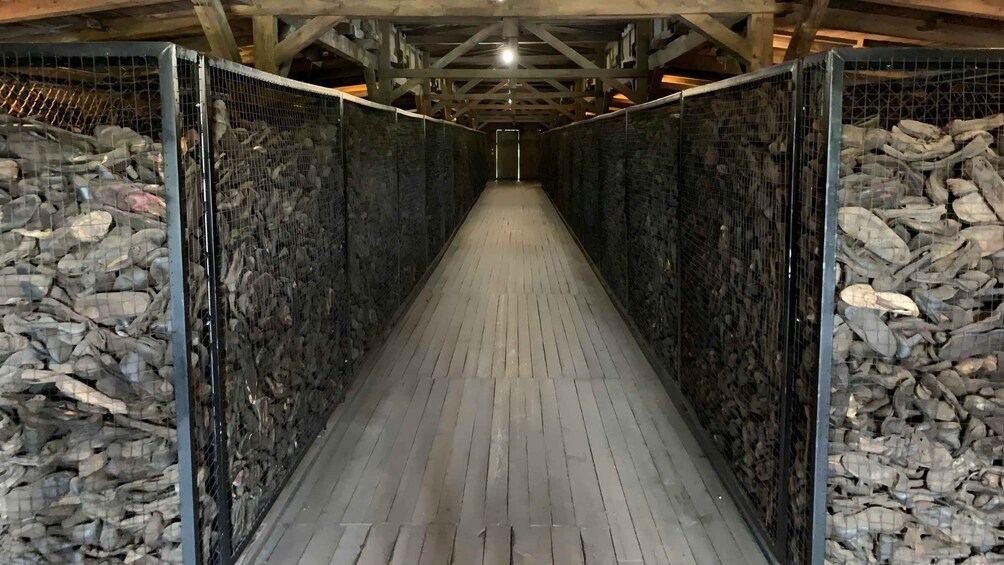
Walk the reconstructed camp roads built by prisoners from gravestones taken from Jewish cemeteries. Inside Barracks 62, the core permanent exhibition covers the experiences of prisoners through testimony, photographs, and objects. The shoe exhibition – tens of thousands of pairs confiscated from victims, including from the extermination camps of Operation Reinhard – is one of the most affecting Holocaust exhibits in Europe.
The Gas Chambers
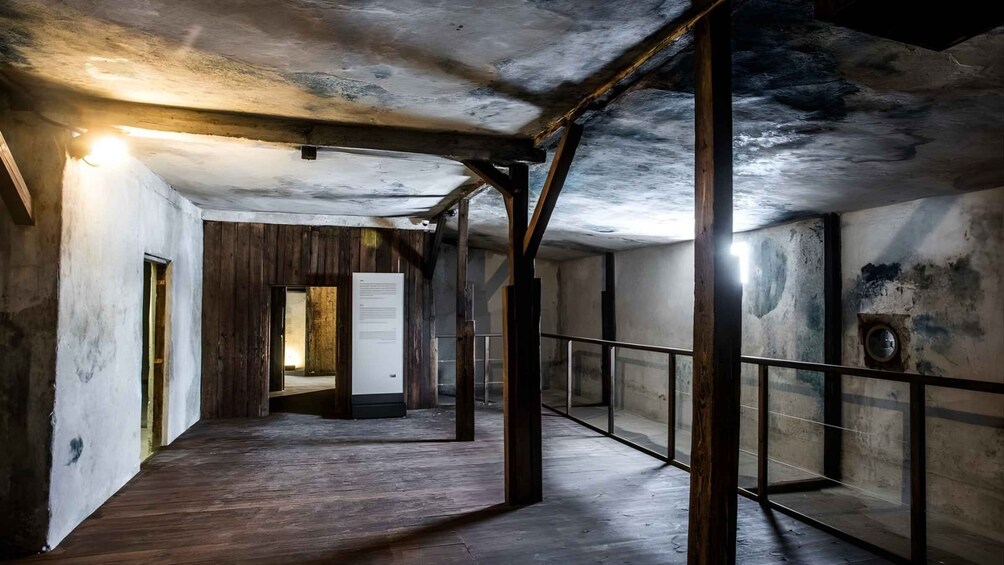
Majdanek had seven gas chambers, making it one of the largest killing facilities in the Nazi camp system. Unlike Auschwitz-Birkenau, where the SS destroyed most gas chambers before retreating, the chambers at Majdanek were captured essentially intact. Your guide provides documentary testimony from both survivors and perpetrators, giving voice to what happened here without turning it into a performance.
The Crematorium
The original crematorium building in the camp's economic zone, with its five furnaces, has been preserved as it was found in July 1944 when Soviet forces liberated the camp. The guide explains the historical procedures and provides context from the Nuremberg Trials documentation.
The Mausoleum
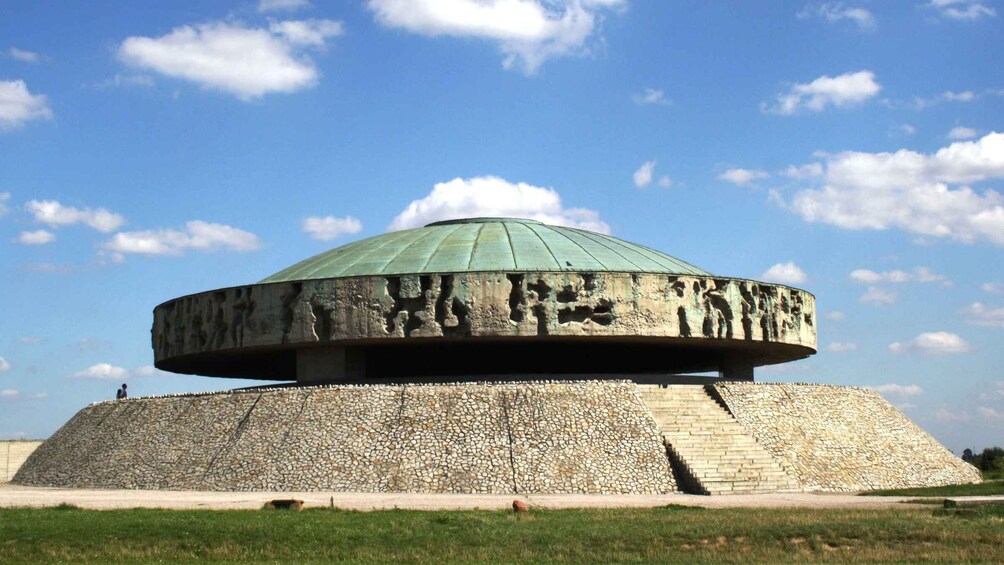
The tour concludes at the Mausoleum – a domed structure containing the ashes of victims. It is a place of silence, reflection, and, for many visitors, the most emotionally significant moment of the visit. Your guide gives you time here before closing.
A note on pace: This tour does not rush. Your guide adapts the depth and pace of commentary to your group. Some visitors need more time in the barracks exhibitions; others need longer at the Mausoleum. There is no fixed script – this is a private tour, and it moves with you.