Set out from Ísafjörður and travel through a succession of fjords that feel genuinely remote. The Westfjords are geologically considered the oldest part of Iceland, built up over millions of years of volcanic layering and glacial carving, and the landscape carries that weight. Every bend in the road opens onto something that looks like it hasn't changed in centuries.
Stop at Önundarfjörður, which holds a broad golden beach and a wind-sculpted dune system — a protected nesting ground for eider ducks, and a reminder that this coastline rewards slow attention. Beyond it, Dýrafjörður unfolds with some of the highest mountains in the Westfjords rising above a fjord dense with flora, seabirds, and geological character.
Pass through the newly opened Dýrafjörður tunnel, a quiet engineering milestone that replaced a seasonal and treacherous mountain crossing. On the other side, Arnarfjörður opens up — one of Iceland's longest fjords at 30 kilometres — and at its innermost reach, tucked into the Dynjandisvogur creek, Dynjandi waits.
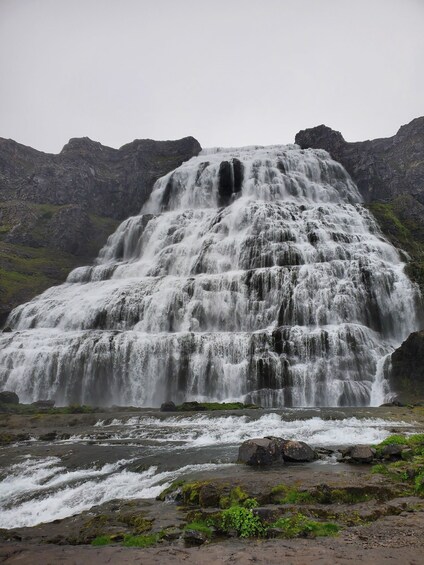
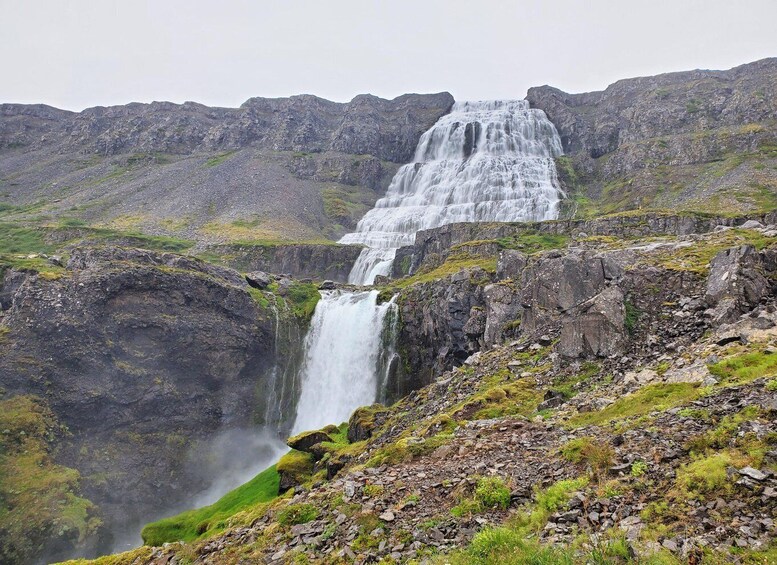
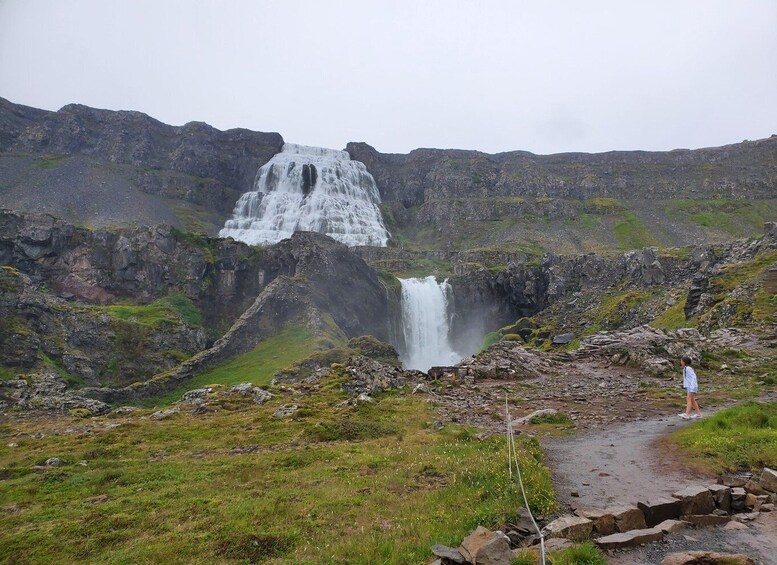
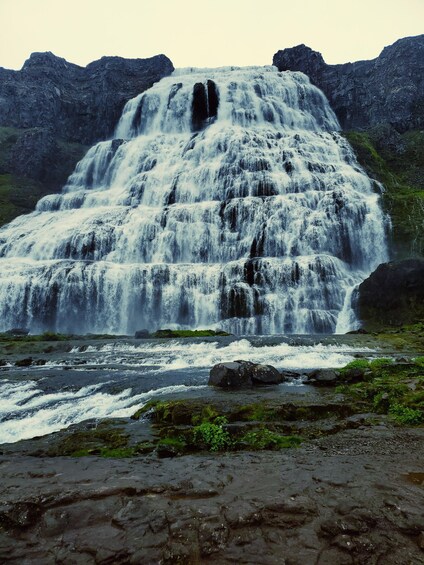
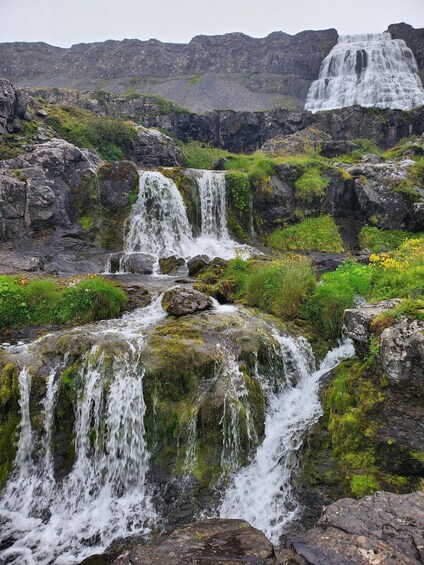
Dynjandi is not one waterfall but seven, each tier stepping down from the cliff edge in a shape that widens as it falls, the whole formation resembling an enormous bridal veil. Its source is the Eyjavatn Lake on the Glama moors — a body of water once believed to be a glacier until the late 1800s. Standing below it, with the fjord at your back and the cascade thundering above, is one of those moments that renders words inadequate.
Enjoy a full hour here. There's a short hike to the uppermost tier for anyone who wants closer contact with the falls and an elevated view across the fjord and surrounding mountains — well worth the effort if the conditions allow.